The Parts of the Yard You Actually Stand On
Grass and plantings are only half of a property. The other half is the hard surfaces — the patio you sit on, the walkway to the front door, the driveway you park on, the wall holding back a slope that wants to move. That’s hardscaping, and One Stop Shop LC handles it as its own trade. These are the elements that take the most weight, the most weather, and the most freeze-thaw punishment every winter, so they’re also the ones that show it first when they’re built on ground that was never prepared properly. We build them to sit on a base that holds.
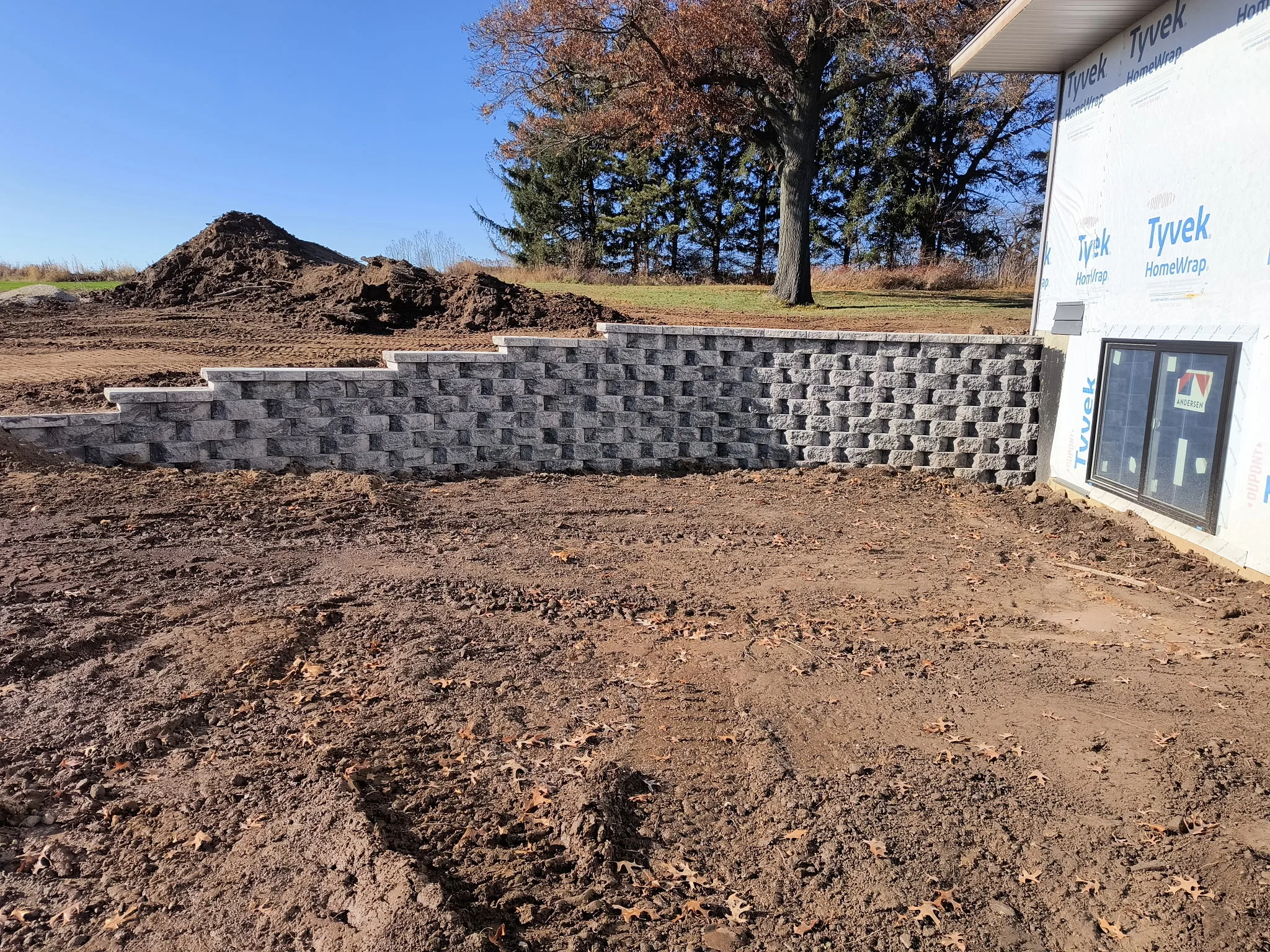
Retaining Walls That Hold the Grade
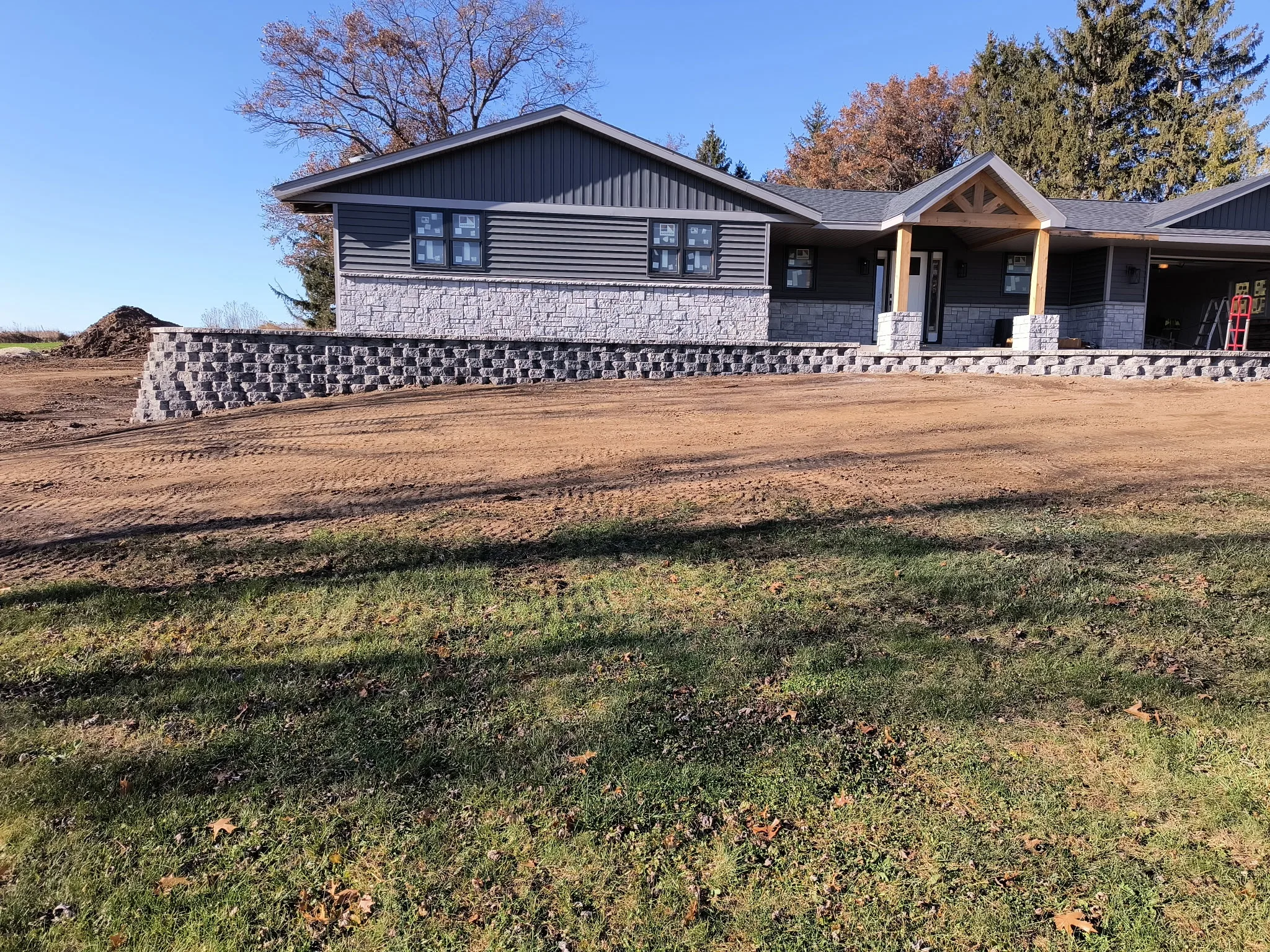
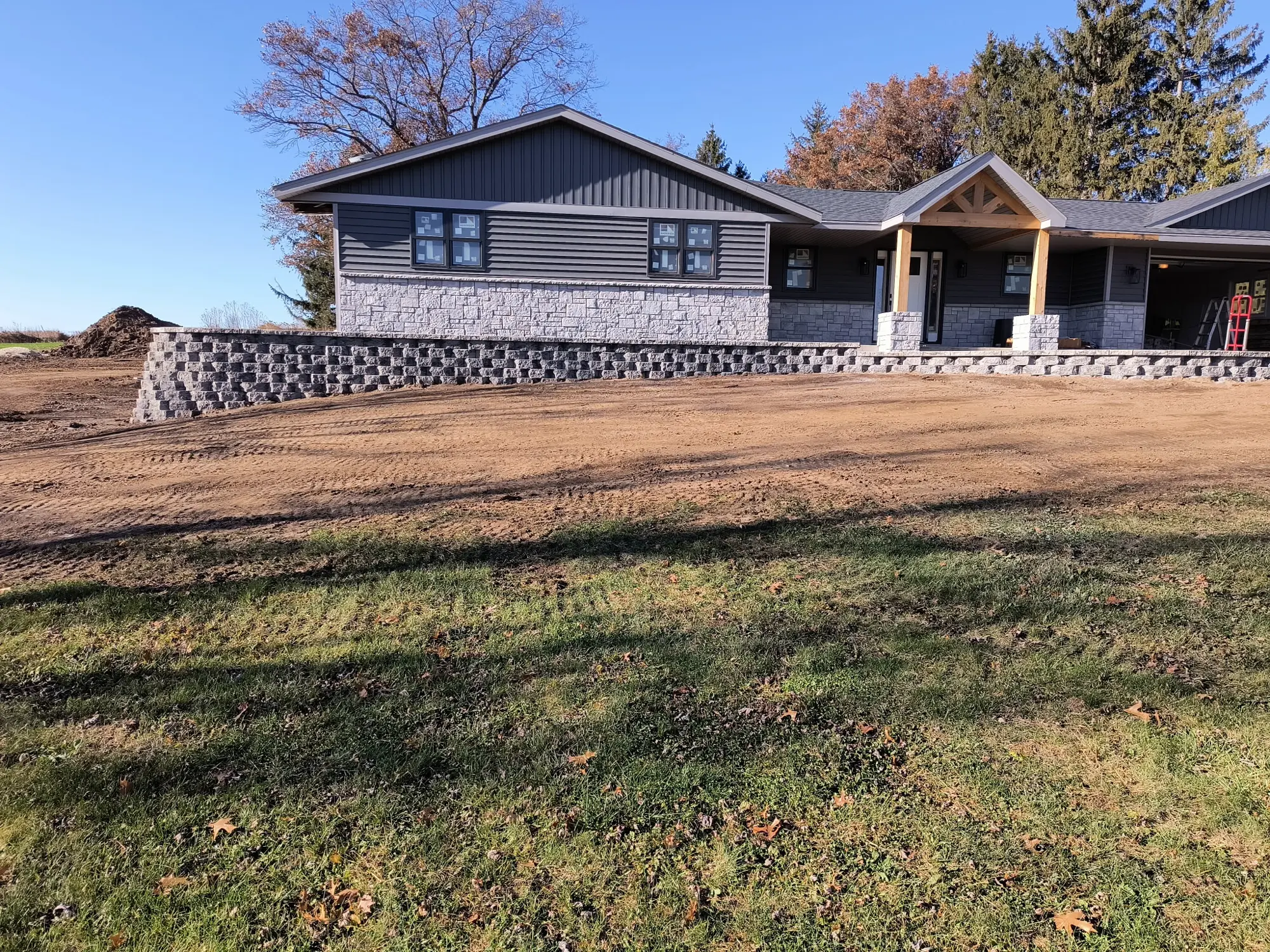
A retaining wall is a drainage structure before it’s a landscaping feature. It holds soil that wants to move downhill, and it has to manage the water moving through that soil at the same time — which is why a wall that was built without proper base depth, backfill, and drainage behind it starts leaning, bulging, or cracking within a few seasons. We build walls to hold: excavated and compacted base, drainage stone and pipe behind the face, and courses set so the load is carried by the structure rather than by luck. Whether it’s terracing a sloped backyard into usable space, holding grade beside a driveway, or replacing a wall that’s already failing, the engineering happens where you can’t see it.
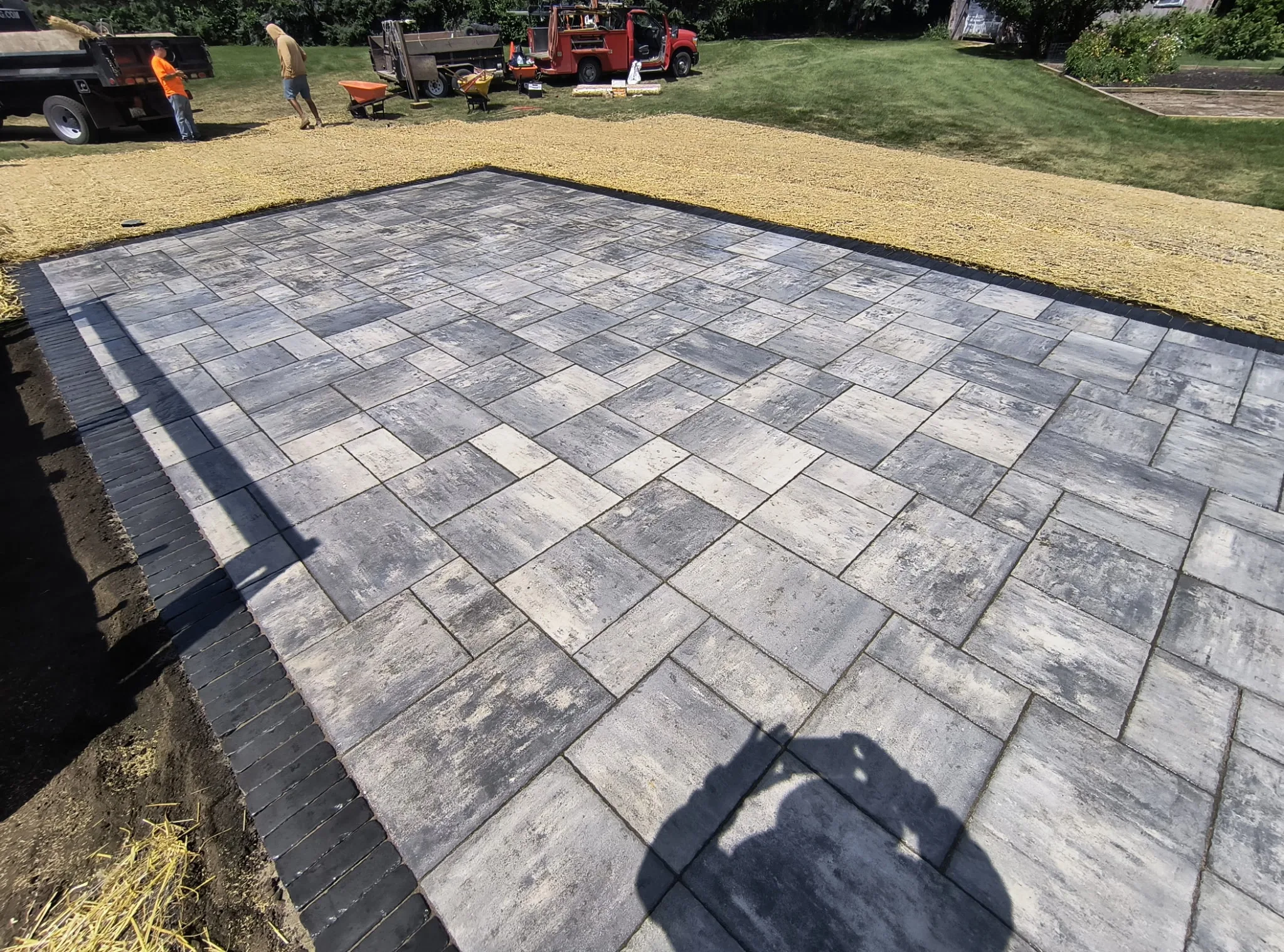
Patios and Walkways Built on a Real Base
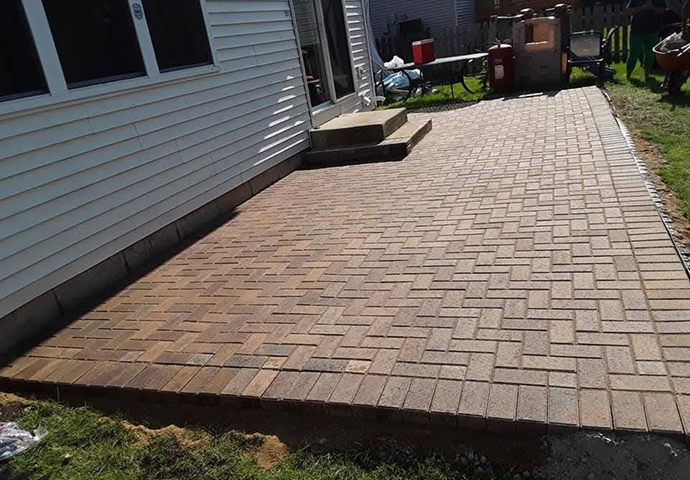
Most patio failures aren’t a paver problem — they’re a base problem. Settling corners, dipped low spots that collect water, joints that spread apart, edges that creep outward: all of it traces back to what was or wasn’t done before the first paver went down. We excavate to depth, compact the base in lifts, screed the setting bed flat, and lock the perimeter so the field stays where it’s laid. Then the pattern goes in — herringbone, running bond, or a border and field laid to match the house. A patio built this way stays flat and drains the way it was pitched to, season after season.
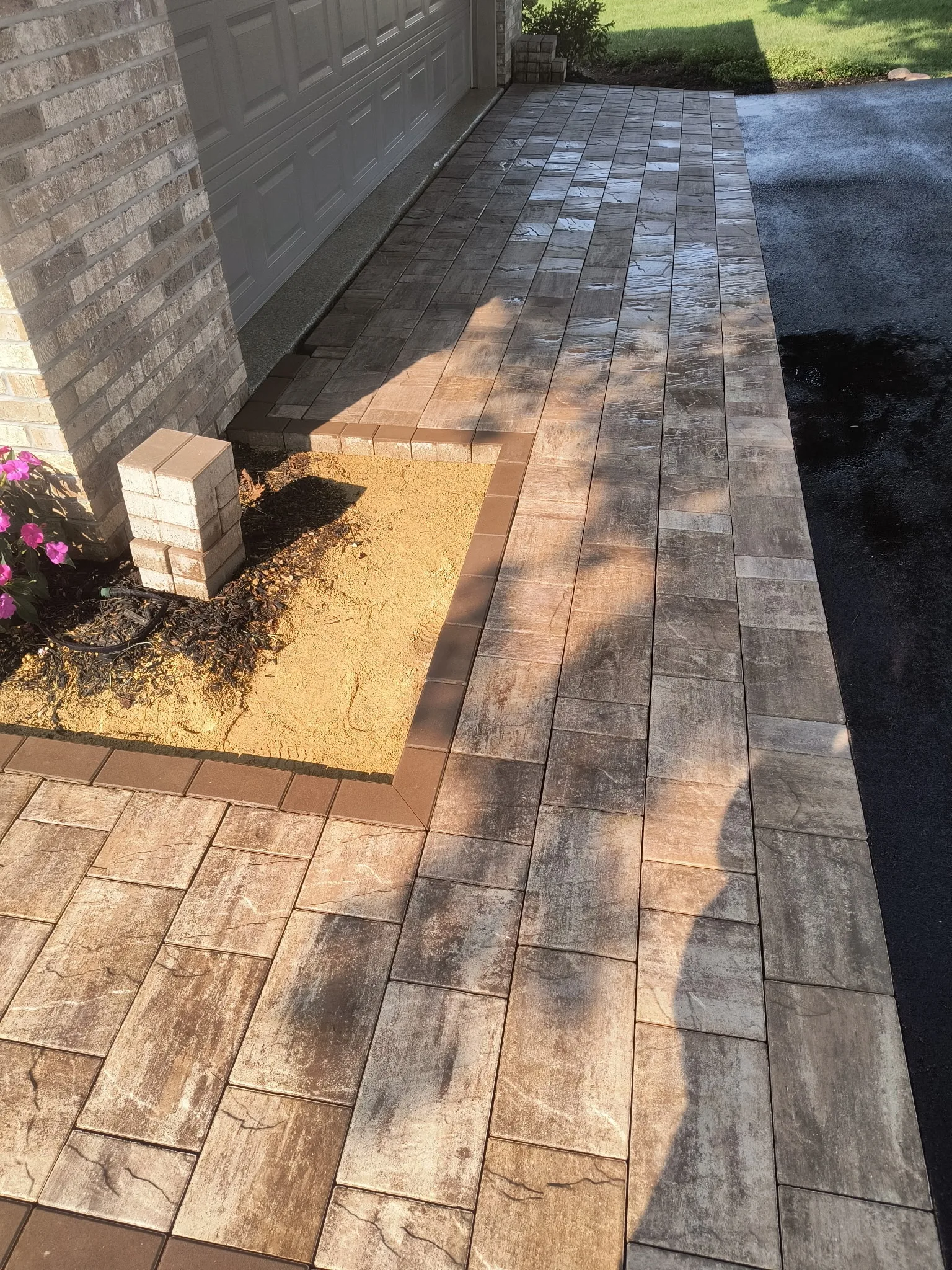
Paver Driveways, Entries & Steps
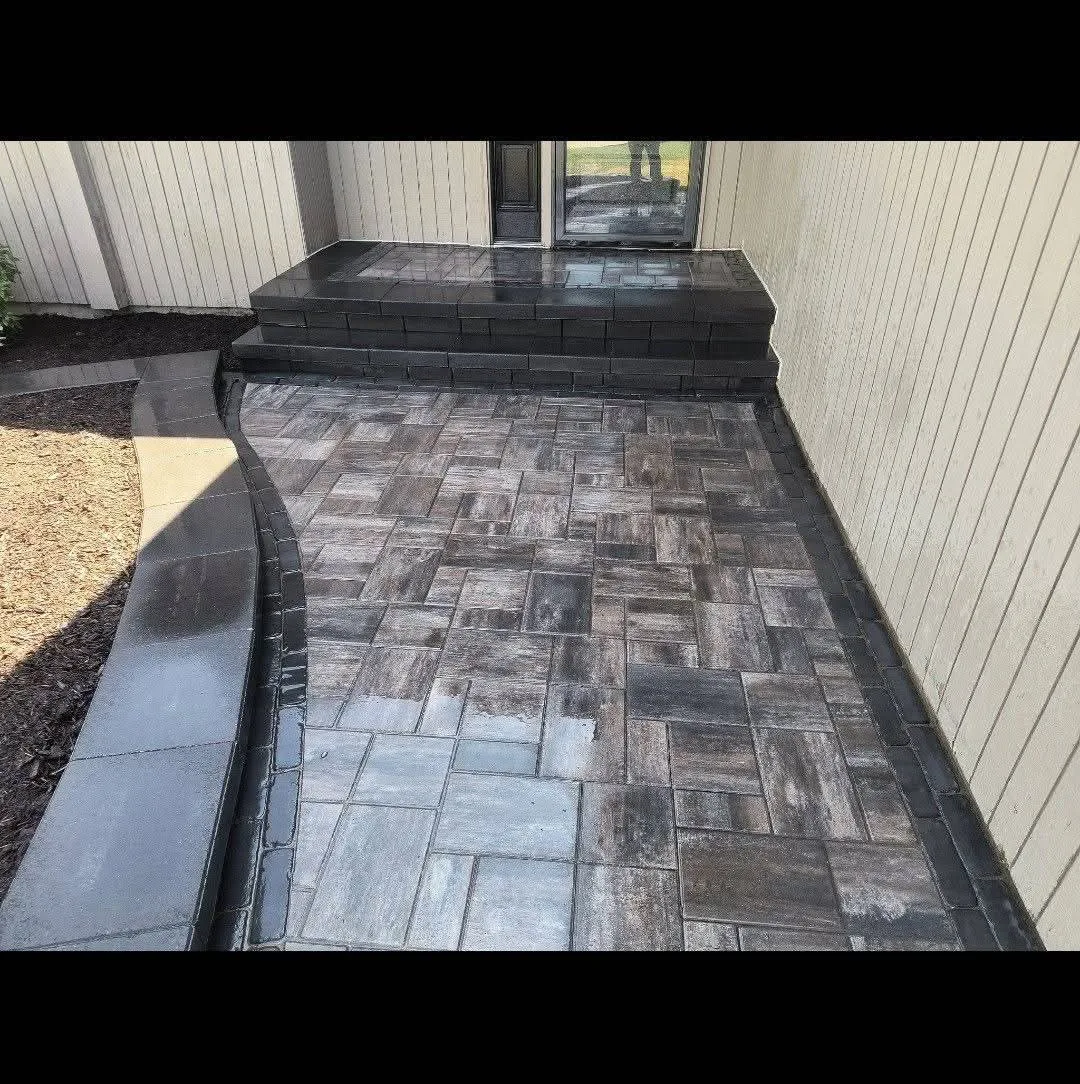
A driveway carries vehicle weight through every freeze and thaw the winter hands it, so it’s built differently than a patio — deeper base, heavier compaction, and pavers rated for the load. Done right, it’s also the first thing anyone sees: a paver driveway, a defined entry walk, and steps that land where they should give the front of a property a finished edge that poured concrete rarely matches. We handle the approach as one piece of work — driveway, walk, steps, and the edging and beds that frame them — so the surfaces line up with each other instead of looking like three separate projects.
One Crew for the Hard Surfaces and Everything Around Them
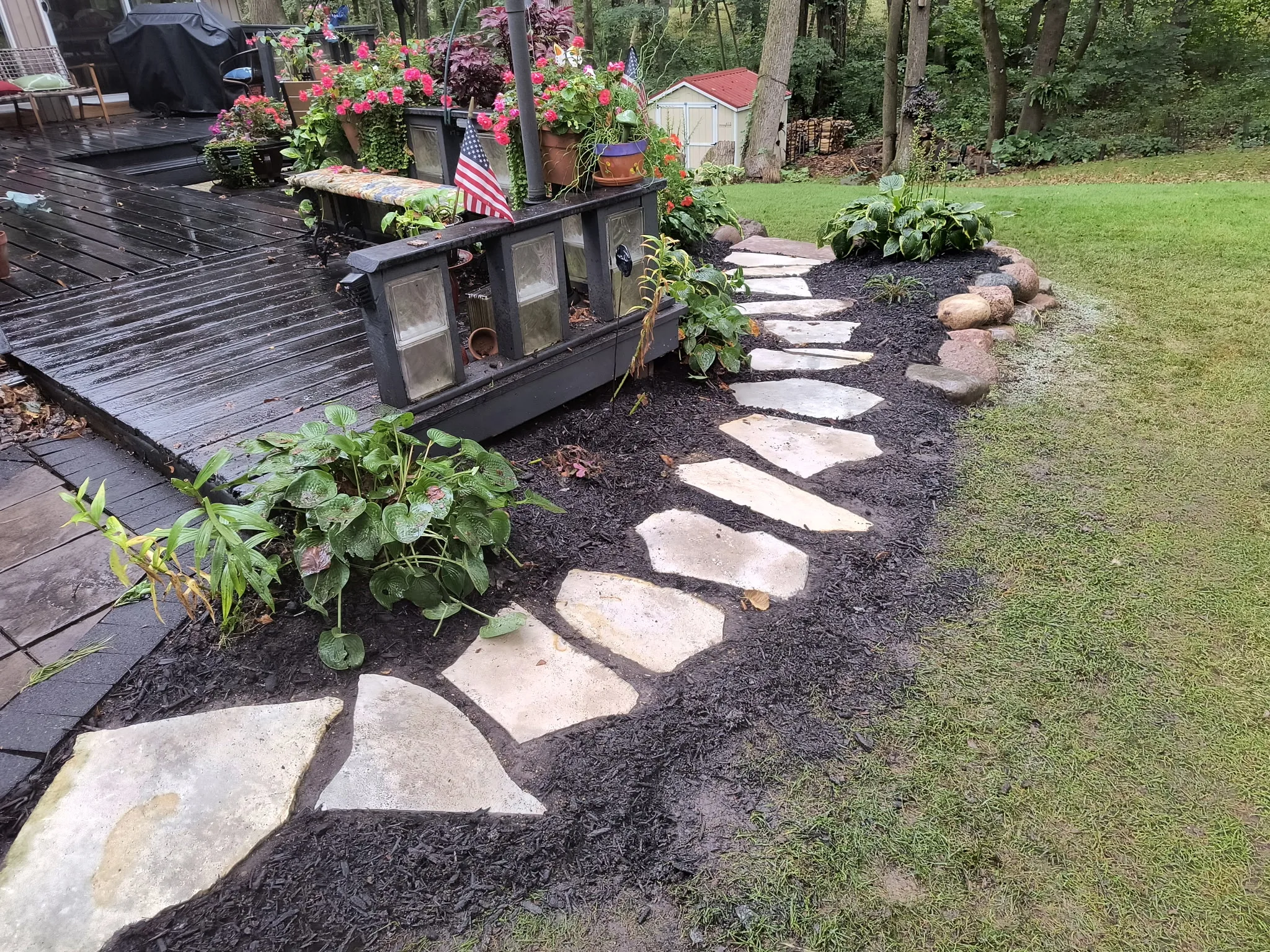
Hardscaping rarely stops at the edge of the pavers. A new patio changes where water goes. A retaining wall needs the slope above it regraded. A flagstone path runs through beds that have to be cut, edged, and mulched to finish the job. Because One Stop Shop LC also handles grading, drainage, planting, and sod, all of that is one crew and one schedule instead of a handoff between trades — and the grading is done by the same people who know what the wall and the patio need underneath them. For residential and commercial properties in Cary, Crystal Lake, Barrington, Lake Zurich, Fox River Grove, McHenry, and Johnsburg, that’s the difference between a finished project and a punch list.
Start With a Walk of the Property
Hardscaping is easier to scope standing on the site than over the phone — the slope, the drainage, and the access all change what the job takes. We’ll walk the property, talk through what you want the space to do, and put together a straightforward plan and price. If you’re weighing a new patio, a retaining wall, a paver driveway, or replacing something that’s already failing, call One Stop Shop LC or request a quote and we’ll get out to take a look.